Queensland has an advanced research-informed healthcare system with world class health professionals, renowned researchers and state of the art facilities. Recent testaments to our highly collaborative, innovative, and well supported environment for conducting leading health and medical research include the development of the world’s first human papilloma virus vaccine, the mRNA vaccine and molecular clamp technology, and at-home non-prescription diagnostic kits for COVID-19.
Queensland’s has a network of infectious disease scientists and clinicians recognised internationally for research excellence that is supported by world-class infrastructure. The Queensland Infectious Disease Research Capabilities document provides comprehensive audit of infectious disease research capabilities across the Griffith University, QIMR Berghofer, University of Queensland, Queensland University of Technology, Bond University, University of the Sunshine Coast, James Cook University and the Translational Research Institute.
Queensland has world-leading researchers in areas such as:
- viral, bacterial and parasitic infection
- vaccine research and drug discovery
- genomics and personalised medicine
- digital and AI-enabled healthcare
- imaging and imaging technology
- cellular and molecular neuroscience
- advanced therapies for cancer
and has one the world’s leading high-risk pregnancy units.
Five out of Queensland’s 9 universities have been rated ‘above’ or ‘well above’ world standards for medical and health sciences by the Australian Research Council.
Queensland boasts a critical mass of leading health and medical research precincts, institutes, and centres and over 140 research organisations involved in health and medical research. Queensland has nine universities – including three of Australia’s largest – all with strong research linkages with Queensland’s research hospitals and dedicated world-class research institutes and centres.
Leading health and medical research centres
All health and medical research centres
Industry-research collaboration and commercialisation
Vaccine development
Millions of lives will be saved from cervical cancer by the Human Papilloma Virus (HPV) vaccine Gardasil® that was developed at the University of Queensland by Professor Ian Frazer and the late Dr Jian Zhou to reduce the incidence of cervical cancer. Now produced by Merck Vaccines Gardasil® has led to a 90% decrease in the prevalence of HPV.
Diagnostic imaging
Most of the MRI scanners in the world use magnetic resonance technology research by Queensland Centre for Advanced Imaging. The Translational Research Institute (TRI) collaboration with the Siemens Healthineers enables researchers and clinicians to use advanced medical imaging without the need for invasive testing.
Vaccine development
A universal vaccine for Malaria – a disease that annually causes over 200 million clinical episodes and more than 600,000 deaths has been developed by JCU’s Australian Institute for Tropical Health and Medicine (AITHM), is in clinical development in a project led by AITHM in collaboration with Townsville University Hospital, DMTC Ltd and Pfizer.
AI-enabled healthcare
In a project aimed at using AI and whole-genome sequencing to predict patient outcomes of cancer treatment, the QIMR Berghofer have partnered with Brisbane-based AI technology company, Max Kelsen, precision analytics firm, genomiQa, genome sequencing company, BGI Australia, and the Royal Brisbane and Women’s Hospital.
Personalised medicine
Fast-tracking of research into potential new lung cancer drug treatments has begun at the Centre for Genomics and Personalised Health in a partnership with Janssen Pharmaceutica NV that provides access to their Jump-stARTer Compound Library.
AI-enabled healthcare
An acute-care bed dashboard to visualise unit bed capacity, patient status and care trajectory has been developed by Datarwe, a public-private collaboration with Griffith University, Gold Coast University Hospital, Queensland AI Hub and other healthcare providers and leading healthcare ecosystem partners.
Medical devices
The easily stored and administered needle-free vaccine delivery technology developed by researchers at the Australian Institute for Bioengineering and Nanotechnology has been commercialised by UQ spin-off company Vaxxas into their Nanopatch™ High-Density Microarray Patch (HD-MAP).
Personalised medicine
Working to identify cancer-causing genetic mutations for better cancer survival rates, the Australian Translational Genomics Centre is a partnership between QUT, Metro South Hospital and Health Service, and Pathology Queensland, and is one of the largest genomic diagnostic and research DNA sequencing services of its kind in Australasia.
Medical technology
Global medical technology group Stryker has established its first Australian research and development facility at the Herston Health Precinct in collaboration with The University of Queensland, Queensland University of Technology, Metro North Hospital and Health Service and the Queensland Government.
Contact the commercial partnership offices of Queensland universities and research institutes for details of their research-industry collaboration or investment opportunities.
Support for the health and medical industry in Queensland
Queensland’s health system
Queensland Health is the lead government agency for the state’s health system. It works with 16 Hospital and Health Services (HHSs), which are independent statutory bodies responsible for delivering public health services across Queensland. Clinical Excellence Queensland supports the Queensland Clinical Networks, which connect health professionals, services and systems across a range of specialties and priority groups to improve the safety and quality of healthcare.
Sustained investment
Several of the HHS operate major tertiary research hospitals in close partnership with the many specialised research centres and health faculties of Queensland’s universities and research institutes such as the Translational Research Institute (TRI), QIMR Berghofer Medical Research Institute, and the Australian Institute of Tropical Health and Medicine.
Successive Queensland Governments have developed major research hospitals and institutes over the last two decades. The Queensland Cancer Centre at the Herston Health Precinct will deliver at least 150 beds and strengthen partnerships with nearby health, research and education facilities. Queensland Government investment has also supported a medical manufacturing facility at the Translational Research Institute in Brisbane, designed to produce promising drugs and vaccines for clinical trials.
 Open larger image
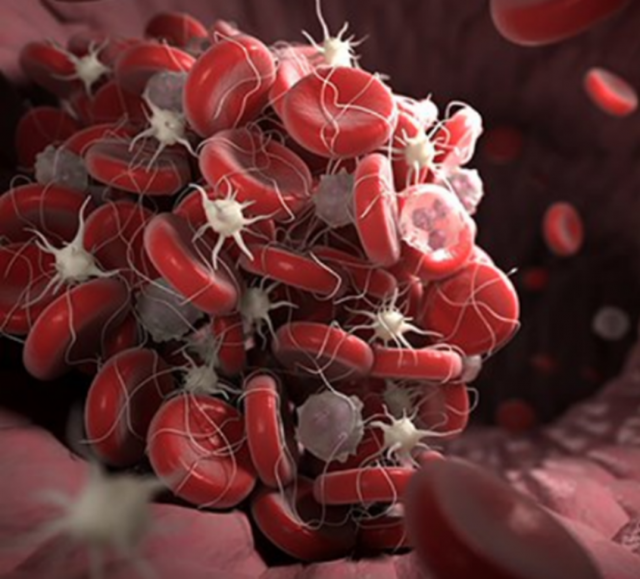
UQ Australian Institute for Bioengineering and Nanotechnology – Illustration of blood clotting process
Dr Alexandr KakinenBiomedical industry
Queensland is strengthening its biomedical industry through strategic investment in research, advanced manufacturing, clinical trials and commercialisation. Support includes the $180.6 million Sovereign Industry Development Fund, which is focused on building Queensland's capability in strategic industries, including biomedical and biofuels. Investments in biomedical manufacturing infrastructure, clinical trial capability and industry partnerships are helping translate research into new therapies, technologies and high-value jobs for Queenslanders.
Research and innovation support
Queensland Health’s Research Strategy 2032, under the HEALTHQ32 vision, promotes a dynamic research ecosystem that translates research into effective and efficient healthcare delivery. The strategy supports the full research pipeline from ideas to research excellence and implementation. The searchable Database of Research Activity covers human research undertaken in Queensland Health and includes research funded through clinical research, nursing and midwifery, and other health research funding programs.
The majority of health and medical research in Australia is funded by two independent statutory agencies, the National Health and Medical Research Council (NHMRC) and the Australian Research Council (ARC).
Talent pipeline for health and medical R&D
Queensland universities offer undergraduate and postgraduate courses and units in health and medicine, and many partner with Queensland’s research hospitals. Most universities also host major research institutes and specialised research centres that support postgraduate students and dedicated researchers.
High school students can develop industry-ready skills through the Gateway to Industry Schools Health program. This long-term program supports the development of a skilled health workforce and is delivered by CheckUP.
Traditional knowledge and biodiscovery in Queensland
Advance Queensland supports Queensland entrepreneurs, innovators and researchers through grants, programs, events, hubs and resources that help turn ideas into commercial outcomes. Current programs include support for women-led startups, First Nations innovation and private sector pathways.