Recognised as a global Advanced Manufacturing Hub by the World Economic Forum, Queensland excels in advanced manufacturing research undertaken with industry and international partners Research includes new material development (e.g. solar film), additive and subtractive manufacturing (e.g. bioscaffolding), robotics, robotic vision and artificial intelligence (in health, food, biosecurity and defence), micro and nanoscience, biofuels and other bioproducts, bioprocessing and synthetic biology.
Queensland has several leading institutes and centres and over 80 research organisations involved in advanced manufacturing research.
Leading advanced manufacturing research centres
Advanced manufacturing research centres
Industry-research collaboration and commercialisation
Additive biomanufacturing
Researchers at the Herston Biofabrication Institute combine engineering, design, computer and medical science in 3D scanning, modelling and printing of medical devices, bone, cartilage and human tissue – directly applied to the Queensland health industry.
New materials
Scientist and engineers at Queensland Centre for Advanced Materials Processing and Manufacturing discover new engineering materials and manufacturing technologies. AMPAM helped Cook Medical Australia to increase their revenue by $35 million.
Biofuels
The QUT Pioneer BioPilot is accelerating research and innovation in biorefining. The Plant is hosted by Mackay Sugar Limited. Based on-site with an operating sugar factory, provides researchers direct access to biomass and sugarcane by-products.
New materials
The USQ Centre for Future Materials delivers world class research in the design and development of innovative materials for diverse engineering applications. The Centre is working with Gilmour Space Technologies and Teakle Composites under a Cooperative Research Centres Project to develop linerless filament wound composite liquid oxygen rocket fuel tanks for low cost space transport.
New materials
The Australian Institute for Bioengineering and Nanotechnology have worked in partnership with Myuma Group Ltd (an Indjalandji-Dhidhanu initiative) to develop a method of extracting nanocellulose from Australian spinifex grass. These novel nanofibres significantly reinforce products creating super-strong roads, tyres and super-thin condoms.
Vaccine manufacture
Researchers at the UQ Australian Institute for Bioengineering and Nanotechnology (AIBN) developed the needle-free vaccine delivery technology. This has been commercialised by UQ spin-off company Vaxxas into their High-Density Microarray Patch (HD-MAP) that delivers easily stored and administered vaccines.
Microalgal and macroalgal resource
The research by Prof. Peer Schenk from the School of Agriculture and Food Sciences at The University of Queensland has been commercialised by Queensland-based QPonics Limited for sustainable production of omega-3 and other nutraceutical, and food ingredient products from marine microalgae.
Robotics
The Advanced Robotics for Manufacturing Hub (ARM Hub) (a Queensland Government, QUT, Urban Art Projects partnership) applied its expertise in robotics and vision technology to assist Verton Australia to develop the world’s first remote-controlled load-management system using revolutionary gyroscopic technology.
Resource recovery
BlockTexx and researchers at the QUT Centre for a Waste-Free World have developed a process that transforms complex textile waste into a valuable commodity at a new large-scale textile recovery facility at Loganholme, Queensland.
Support for advanced manufacturing in Queensland
 Open larger image
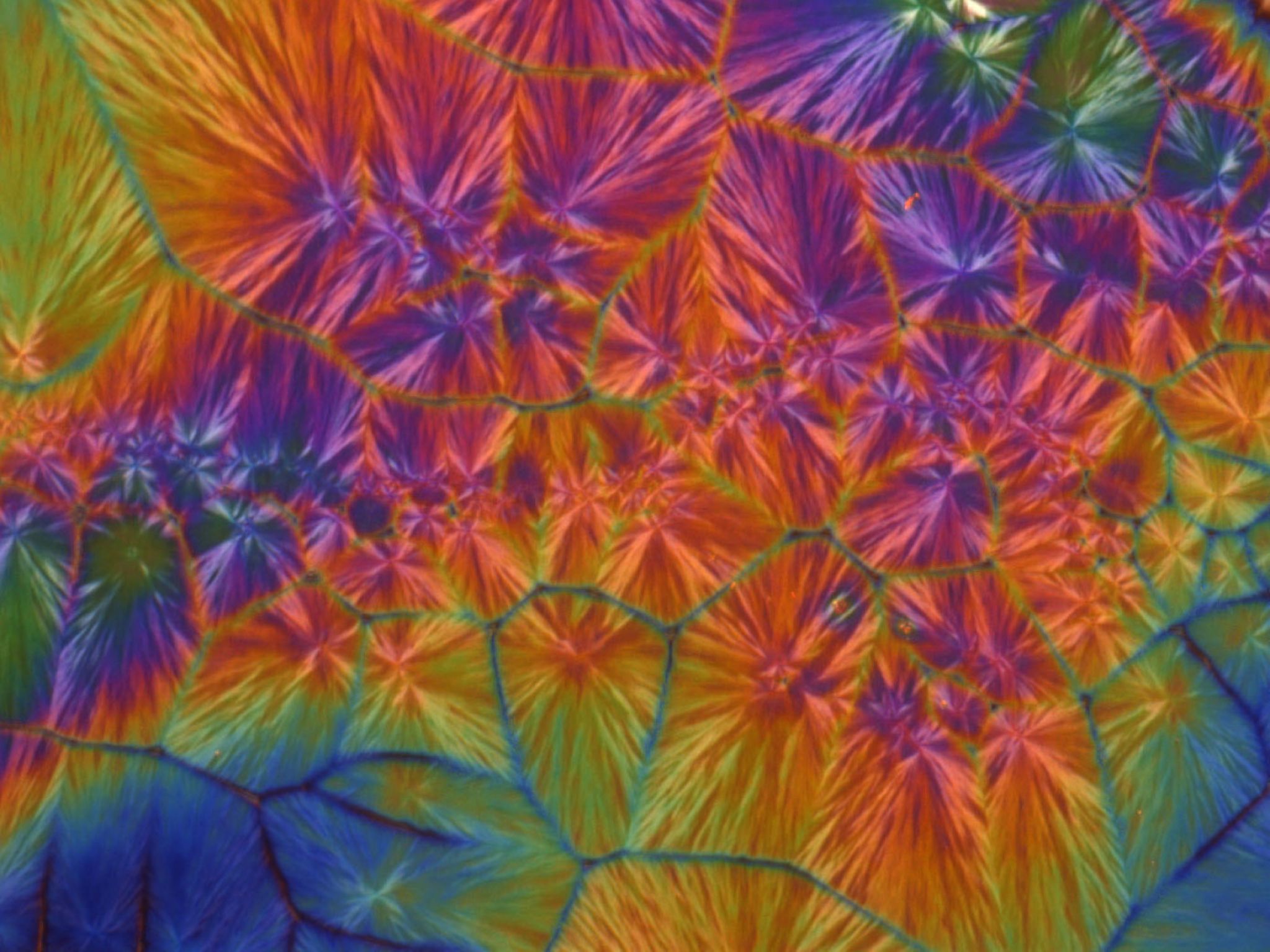
QUT Centre for Biomedical Technologies - Polarizing light micrograph of a thin film of the polymer polycaprolactone.
Christina TheodoropoulosQueensland’s regional Industry Manufacturing hubs are co-located or closely affiliated with our regional universities. The Rockhampton Manufacturing Hub for advanced food, metal and rail manufacture and the Mackay Resources Centre of Excellence that focuses on mining equipment, technology and services (METS), resource recovery, and agriculture are at QCUniversity campuses.
The Transforming Queensland Manufacturing Strategy 2025–30 sets a 5-year vision for Queensland's manufacturing industry to drive greater productivity and innovation in our economy and expand access to global markets for our value-added products.
Queensland’s future advanced manufacturing workforce will also be supported by the $60 million Moreton Bay TAFE Centre of Excellence, which will include an Advanced Manufacturing Hub and training linked to construction, engineering, electrotechnology and advanced manufacturing.
Talent pipeline for advanced manufacturing
 Open larger image
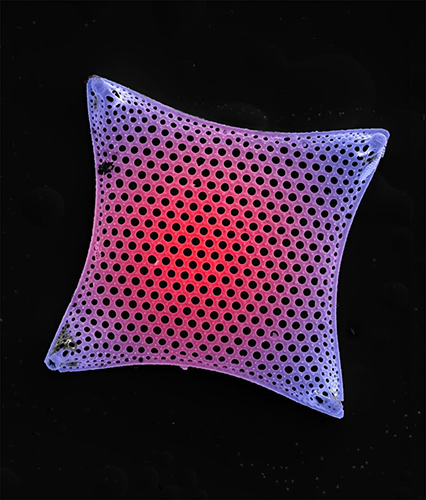
Australian National Fabrication Facility - Micro-hollow-Pillow structure for resistive-pulse testing.
Caizhi LiaoMost of Queensland’s universities offer under and post graduate courses and units in advanced manufacturing. . Queensland universities partner with the manufacturing and engineering sector to give undergraduates the opportunity to learn and network with professional engineers, designers and academics.
Students in Queensland engage with STEM subjects from an early age through school and university-led initiatives that build skills and awareness.
High school students can also gain industry exposure through the Advanced Manufacturing Gateway to Industry Schools program, which supports pathways into manufacturing careers and helps develop a skilled, job-ready workforce.
Queensland Science…ADVANCED MANUFACTURING…making a difference
Find out why top researchers and industry leaders are saying Queensland is one of the best places in the world for food and agriculture research.
“Queensland Science making a difference ADVANCED MANUFACTURING”
Ian O’Hara
Principal Research Fellow
Science and Engineering Faculty, QUT
The manufacturing sector is looking for renewable and sustainable technologies and transitioning to a future that is higher skilled, more technologically focused
[Caption: Queensland Science… ADVANCED MANUFACTURING… making a difference]
Professor Alan Rowan
Director
Australian Institute of Bioengineering and Nanotechnology
The University of Queensland
Queensland is internationally recognised in cutting edge science, solving society’s problems.
[Caption: Solving real world problems]
We’re all going to be living longer and the key thing is how do we remain healthy for longer?
We have the ability here to make diagnostic tools so that we can check whether you have a disease extremely early on so that it doesn’t become a complication.
Ian O’Hara
Principal Research Fellow
Science and Engineering Faculty, QUT
We work at QUT here on a range of technologies including industrial biotechnology and engineering and bioprocessing. We work directly with farmers where we can take agricultural waste and produce valuable products.
Juhani von Hellens
Technical Manager
BioProton
Ultimately the biggest expense that developing countries have is food production. Agricultural feed supplement products improve the nutritional uptake and makes it more cost effective.
Our company manufactures feed enzymes—the research is vital for us. The university like QUT has the infrastructure, the people the capability to so we can generate world class technologically advanced agricultural products here.
Barry Thomas
Director
Asia Pacific, Vice President, Cook Incorporated
Cook Medical manufactures personalised medical devices here in Queensland. We distribute them to 64 countries. The big issue for us is how are we going to service the developing world?
So we’re working with Queensland universities looking at ways we can improve patient outcomes. There’s some great research going on here in Queensland that are going to lead to real advances in medicine, and the delivery of healthcare. And we’re really excited to be part of that.
Professor Srinivasan Mandyam
Professor of Visual Neuroscience and Robotics
Queensland Brain Institute
School of Information Technology and Electrical Engineering, The University of Queensland (UQ)
Small creatures flying insects can navigate with a very small brain and limited resources so the challenge is – how can we do what a bee does in a plane?
Dr Michael Wilson
Senior Researcher
Boeing Research and Technology – Australia
Boeing has been partnering with Professor Srinivasan’s laboratory on a research project aimed at taking what we can learn from birds and bees and make robots smarter... and that’s world class research.
[Caption: Partnering for success]
Professor Dietmar Hutmacher
Professor and Chair in Regenerative Medicine Science and Engineering Faculty, QUT
Currently in America there are about 1 million plus patients which undergo the removal of the breast based on cancer a year. Europe has a similar size as the US.
We are developing cutting edge 3D printing technology platform which allow us to make this very complex shapes in form of a breast architecture tissue will grow into the scaffold that it is biodegradable.
[Caption: Producing better outcomes]
We are bring it now into clinical trials within the next three years.
Barry Thomas
Together with Queensland science we’re making a difference
Professor Srinivasan Mandyam
Queensland Science
Juhani von Hellens
making a difference
[Caption: Queensland Science making a difference]
[Caption: Come join us]
[Logo: ADVANCE Queensland Jobs now, jobs for the future]
[Caption: Queensland Science Making a difference]
[Caption: Find out more www.science.qld.gov.au]
[Logo: Queensland Government]
Traditional knowledge and biodiscovery in Queensland video
Watch the Traditional knowledge and biodiscovery in Queensland video to learn more about biodiscovery in Queensland and the importance of protecting traditional knowledge.