ngineering research supports Queensland's advanced manufacturing sector through innovation in automation, robotics, digital technologies, materials engineering and production systems. These capabilities align with the Queensland Government's Transforming Queensland Manufacturing Strategy 2025–30.
Queensland has a particularly strong record for developing collaborations between industry and universities to fast track the application of research into the real world. Queensland’s ARM Hub (Advanced Robotics for Manufacturing Hub), for example, combines expertise from research institutions with in-house engineering, data science and design technical expertise to deliver world-first innovations for their commercial partners.
Queensland has been successful in the translation of engineering research into significant technological advances in environment, health, and agricultural sciences. Key discoveries and applications range from novel nanotechnologies to innovations in robotics. Some recent significant research has focused on decarbonisation and in developing cleaner and greener energy sources and management of energy systems.
Queensland boasts a critical mass of leading engineering research centres and facilities and over 100 research organisations involved in engineering science.
Leading engineering research centres
Engineering science research centres
Industry–research collaboration and commercialisation
Disaster resilience
For more disaster-resilient homes, wind and fire engineering researchers at QUT’s Research Engineering Facility partner with major building product suppliers such as Promat and Atlas Copco to develop and test the performance of materials, designs and structures under extreme conditions.
Converting waste into automobile fuel
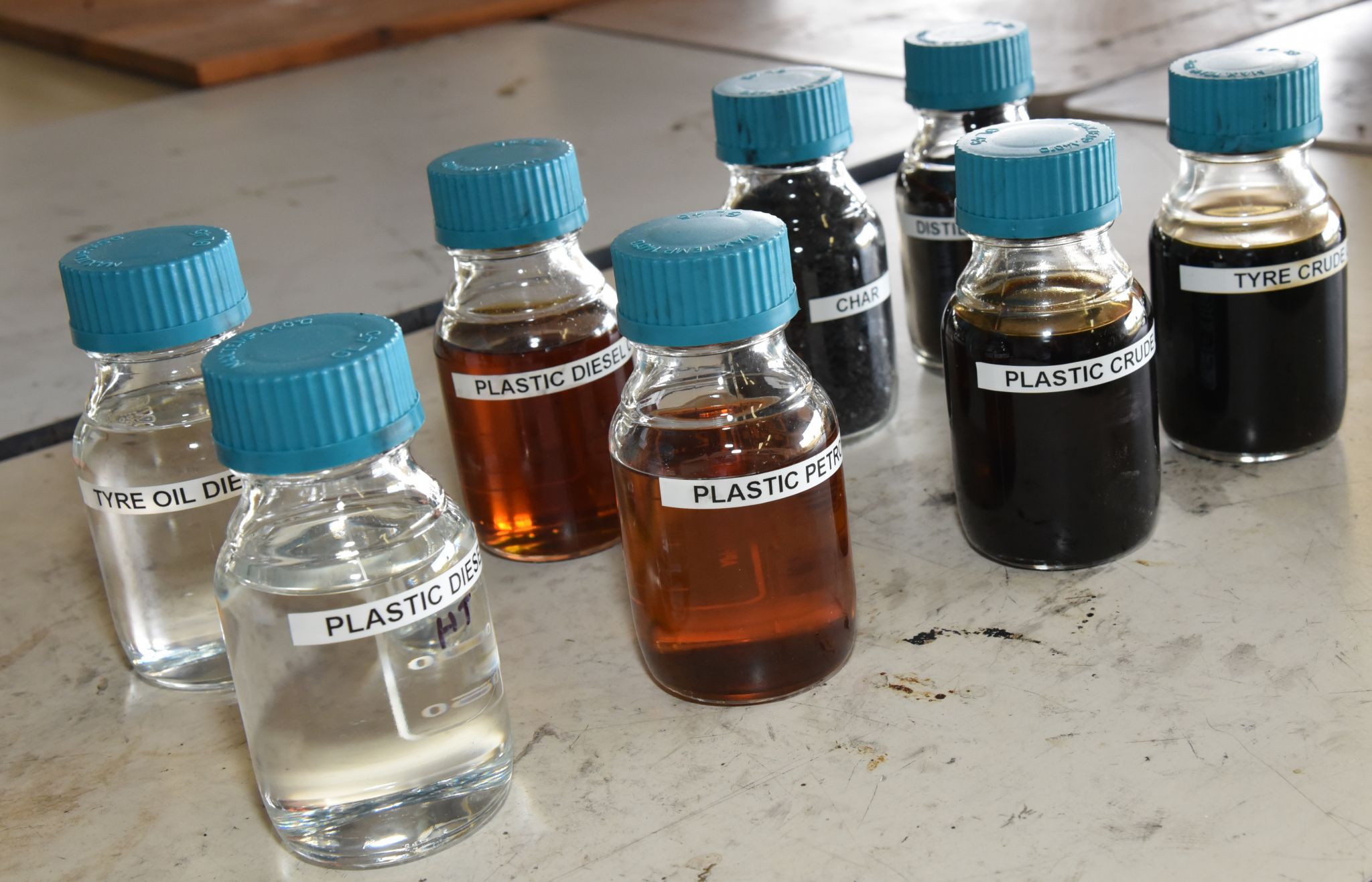
With the potential to supply 70% of Australia’s demand for fuel and to significantly reduce landfill, the Centre for Hydrogen and Renewable Energy at CQUniversity has partnered with Northern Oil Refineryto develop a system that will turn polystyrene, tyres, waste plastic, particle board and other mixed solid waste into commercial-grade petrol and diesel fuel.
Energy efficiency
To reduce the high energy use in mineral processing operations, the UQ Sustainable Minerals Institute has formed an industry-research consortium which includes mining companies Eriez, Glencore and Anglo American, to tackle multidisciplinary aspects of coarse particle processing such as flotation, comminution, classification and process chemistry.
Bioengineering
Collaboration between Herston Biofabrication Institute and the German MedTech company, BellaSeno, has led to the world-first trial of a new technology to print 3D bioresorbable scaffolds that use the body’s natural regenerative capabilities, with the focus on replacing silicone breast implants.
Bioprocess engineering
To develop bio-derived and bio-degradable plastics that have a minimal impact on the environment, the A$13 million Australian Research Council (ARC) Training Centre for Bioplastics and Biocomposites has partnered with the City of Gold Coast to develop novel halophilic biotechnology for PHA (polyhydroxyalkanoates) production from sugarcane.
Composite materials
As leaders in research and innovation in advanced composite manufacturing, the Centre for Future Materials partnered with Wagners Composite Fibre Technologies and Allnex Composites in a $10 million Cooperative Research Centres program that has enabled Wagners to produce high-performing large, hollow rectangular composite profiles through a novel pull-winding process.
Quantum engineering
As part of the international race to build a scalable, quantum computer, the Griffith University node of ARC Centre of Excellence for Quantum Computation and Communication Technology (CQC²T) is leading the Quantum Information Theory research program in partnership with NASA, NIST and the National University of Singapore.
Engineering resource recovery of preserved timber
Preservative treated timber prolongs service life but poses a challenge with disposal. The Durability Centre is working with Forest and Wood Products Australia and a consortium of timber users to identify alternative pathways for reuse that will minimise landfill as an end-of-life option.
Energy engineering
The National Battery Testing Centre (NBTC) at Queensland University of Technology (QUT) tests multiple types and sizes of battery systems in real-world conditions for Australian applications. RedEarth Energy Storage supports the critical work of QUT by providing industry expertise and practical support.
Support for the engineering industry in Queensland
Engineering research supports the objectives of the Transforming Queensland Manufacturing Strategy 2025–2030, which aims to increase productivity, encourage innovation, strengthen supply chains and expand export opportunities for Queensland manufacturers. Engineering capability also contributes to opportunities in advanced manufacturing, biomedical technologies, automation, robotics and critical minerals processing.
Talent pipeline for engineering
 Open larger image
Samples of the crude oils converted from plastic diverted land fill by CQUniversity researchers in the Fuel and energy research group.
CQUniversity AustraliaAll of Queensland’s universities offer under- and post-graduate courses in various disciplines of engineering (e.g. CQUniversity, UniSQ, and The University of Queensland). Many of these programs include internships with key industry partners within Queensland (e.g. internship programs at CQU and QUT) . Many of Queensland’s universities host major research institutes and specialised research centres supporting doctoral students and dedicated researchers who often work on projects involving industry collaborations.
Students in Queensland engage with STEM subjects from an early age through school and university-led initiatives that build skills and awareness.
High school students can also gain industry exposure through the Manufacturing and Engineering Gateway to Industry Schools projects, which supports pathways into manufacturing and engineering careers and helps develop a skilled, job-ready workforce.
The Peter Doherty Awards for Excellence in STEM Education recognise people who demonstrate an outstanding and innovative contribution to STEM education in Queensland.
School-based programs, such as the Gateway to Industry Schools program run by the Queensland Government, and those run by industry, are designed for students and workers to learn about new career options available in knowledge-intensive industries and to address outdated career planning.
Queensland Science making a difference
Watch our Queensland Science making a difference video to find out why top researchers and industry leaders are saying Queensland is one of the best places in the world for engineering research.
Professor Ian Frazer AC
School of Medicine | The University of Queensland
Queensland has great strength across all the fields of science. But we’re particularly strong in applying that in the real world. So the Ecosciences, the agricultural sciences, health sciences, are areas where we have clear strength.
[Caption:Qld Science making a difference]
Professor Katherine Andrews
Director
Griffith Institute for Drug Discovery (GRIDD)
Griffith University
We live in a globally connected world. The challenges we face here are some of the same challenges faced across the world. Aging populations, increased need for health care, and how we can improve quality of life.
[Caption: Healthy communities]
In Queensland, we're extremely well positioned to meet global challenges. We have the right expertise and infrastructure to respond rapidly including developing new diagnostics, new drugs and new vaccines.
We’re translating our discoveries and we have the contract manufacturing capacity to make products that are ready to go into patients and this presents a real opportunity with our national and international partners – to help save lives.
Professor Neena Mitter
Director
Centre for Horticulture Science
Queensland Alliance for Agriculture and Food Innovation (QAAFI)
Good food produced sustainably is what the world needs as 10 billion people will walk on planet earth by 2050. Protein security is a challenge. In the face of climate change we are helping farmers to produce more food that is healthier with fewer inputs.
[Caption: Feeding the world]
And we are making crops more resilient by making them drought and disease tolerant.
Harnessing information technology plays another big role. Helping farmers to be more adaptable to the ever-changing conditions. All this means smarter farming options getting better results for the food industry, consumers and the environment.
Professor Margaret Mayfield
Head of School
School of Biological Sciences
The University of Queensland
Queensland is a really exciting place to do environmental science. And a big part of that is because it has examples of many of the world's ecosystems all in this one special place.
[Caption: Healthy environment]
It really represents a tremendous opportunity for scientists to expand their knowledge. Queensland has knowledgeable locals managing their lands and we're working with them and learning more which helps in their protection.
Queensland's unique biodiversity is offering exciting new solutions with potential in the drug development area or even in the development of novel materials. And what we're finding here, we're taking to the world.
Dr Paul Bertsch
Science Director, Land and Water, CSIRO
All of us want to live in a healthy environment, free from pollution. It's a challenge
but it's also critical not only for us but for generations to come. Businesses across the world are looking for new ways of doing things.
[Caption: Sustainable economies]
The 2020 shock to the global economy has given us the opportunity to reset and rethink how we actually do things but also create huge economic growth benefits and jobs in the future.
Our science is contributing to understanding how we transform to a circular economy. An area of research that's very exciting, that's transforming industries known as synthetic biology. We used bacteria, yeast, and other single cell organisms to be factories, to produce pharmaceuticals, food and advanced materials – biologically and sustainably.
Our research community here in Queensland is playing a critical role to greatly reduce the environmental footprint of our industries and move towards a global sustainable system.
Professor Peta Ashworth OAM
Chair of Sustainable Energy Futures
School of Chemical Engineering
The University of Queensland
We know that approximately one billion people currently lack access to electricity. We're seeing industry work with Queensland scientists on this energy challenge to really make a difference and lower emissions. Doing it in the lab is one thing but connecting it to large scale demonstrations. That's how we really make an impact. It presents a real opportunity to decarbonise the overall energy sector more broadly.
[Caption: Energy]
We're already helping bring a widespread hydrogen energy system closer to reality, particularly for transport and export opportunities.
Professor Neena Mitter
Smarter innovative science, that’s what we Queenslanders do.