Nanomaterials Centre (Nanomac)
Australian Institute for Bioengineering and Nanotechnology and School of Chemical Engineering, The University of Queensland
Formerly known as ARC Centre of Excellence for Functional Nanomaterials
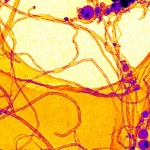
The Nanomaterials Centre’s work is focused on the development of a large variety of functional nanomaterials for applications in clean energy, environment and health. The Centre is an interdisciplinary research centre with research expertise in chemical engineering, chemistry, electrochemistry, materials science and engineering, nanotechnology, catalysis, and materials chemistry and physics.
- Website
- https://nanomaterials.centre.uq.edu.au/
- Organisation type
-
- University research centre
- Cooperative Research Centre – partner organisation
- Number of research staff
- 20-100 research staff
- Address
- AIBN, Building 75, Cnr College and Cooper Roads, The University of Queensland, St Lucia QLD 4072
Strengths and capabilities
- New catalysts for solar fuel generation
- New generation high performance rechargeable batteries
- New generation of low cost solar cell materials
- Gene/drug delivery and imaging
- Nanocatalysts design for sustainable green chemicals
- New photocatalysts for air/water pollotant removal
- New reaction system/device for CO2 reduction
Facilities and major equipment
- Rechargeable battery assembly and testing instrument
- Elemental and Thermal Gravimetric Analysis instruments
- Catalysis product characterisation and analysis (GC, HPLC)
- X|ray powder diffraction analyzer
- Zetasizer Nano (zeta potential, particle size dist)
- Low humidity research lab
- Quantum-dot synthetic system
- Glove boxes
Lead researchers
- Professor Lianzhou Wang FAA FTSE is Australian Research Council (ARC) Australian Laureate Fellow at the School of Chemical Engineering, Director of Nanomaterials Centre (Nanomac), and Senior Group Leader of Australian Institute for Bioengineering and Nanotechnology (AIBN), The University of Queensland. Prof. Wang has contributed 3 edited books, 14 edited book chapters, more than 600 journal publications (including top ranking journals such as Science, Nature Energy, Chem. Rev., Chem Soc. Rev., Nature Commmun, Angew. Chem., Adv. Mater., J. Am Chem. Soc., etc.), filed 20 patents and delivered over 130 plenary/keynote/invited presentations. His publications have received >55,000 citations with a H-index of 127 (Google Scholar). Prof. Wang is the elected fellow of the Australian Academy of Science (FAA), the Australian Academy of Technological Sciences & Engineering (FTSE), Academia Europaea (MAE) and Royal Society of Chemistry (FRSC).
- Professor Chengzhong (Michael) Yu is an internationally recognised expert in materials science. His group has focused on the synthesis of functional nanomaterials specifically nanoporous materials and their applications in drug delivery, diagnostics and energy storage. Professor Yu has over 400 publications, which have been cited over 27,890 times and resulted in an H-index of 87 (Google Scholar). He is an Australian Research Council (ARC) Future Fellow (2009). He is the recipient of the 2015 Le Févre Memorial Prize for Chemistry (The Australian Academy of Science), the 2015 UQ Vice-Chancellor’s Research Focused Fellowship, and 2004 the second prize of the National Science Award of China 2004. He has been invited to give more than 70 plenary, keynote and invited talks. Professor Yu is a referee for more than 60 international journals and a reviewer for the ARC and NHMRC.
- A/Professor Bin Luo is currently an ARC Future Fellow and Group Leader in Australian Institute for Bioengineering and Nanotechnology (AIBN) at the University of Queensland (UQ). He received his doctoral degree in Physical Chemistry from National Center for Nanoscience and Technology (NCNST), University of Chinese Academy of Sciences (UCAS) in July 2013. In August 2014, Dr Luo joined UQ as a Postdoctoral Research Fellow in AIBN. He then secured highly competitive UQ Postdoctoral Research Fellowship (2015-2018), ARC DECRA Fellowship (2018-2021), and ARC Future Fellowship (2021-2025).
- A/Professor Jingwei Hou received his Ph.D. in Chemical Engineering from the University of New South Wales in 2015. He then joined the UNESCO Centre for Membrane Science and Technology (2015-2017) and University of Cambridge (2017-2019, affiliate of the Trinity College) for this post-doctoral research. In 2019, he returned Australia as an ARC DECRA Fellow at the School of Chemical Engineering, University of Queensland. In 2021, he was named the ARC Future Fellow. He is currently an Associate Professor and group leader of the Functional Materials Engineering (fme) Lab.
Achievements of the centre
- Ultrastable functional composite glasses for clean energy conversion.
- New generation quantum dot solar cells with world record efficiency.
- New artificial leaf for harnessing solar energy to produce renewable hydrogen and to reduce CO2 emission.
- Printed batteries.
- Long lifespan high-energy battery materials.
Key science sectors
More information about the sectors this centre is involved in:
Update details
Is this your centre? See any issues? Send a request to update your listing.