Institute for Biomedicine and Glycomics (IBG)
Griffith University
Formerly known as Institute for Glycomics Griffith Institute for Drug Discovery (GRIDD) Menzies Health Institute Queensland (MHIQ)
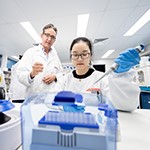
Griffith University has a strong history of world-leading biomedical and glycomics research with a track record of translating and commercialising discovery science towards new therapies, vaccines, and diagnostics for diseases of global impact and unmet need. The Institute for Biomedicine and Glycomics provides outstanding discovery and translational research, infrastructure, and training expertise.
Comprising of more than 400 researchers and professional staff, our state-of-the art infrastructure and equipment, coupled with our expert scientific and operational personnel, facilitates our worldclass research. Located on the Gold Coast and Brisbane (Nathan Campus), the Institute benefits from its proximity to the Gold Coast Health and Knowledge Precinct, and its significant scale in partnerships and alliances in Queensland, Australia and globally.
- Website
- https://www.griffith.edu.au/research/institute-biomedicine-glycomics
- Organisation type
-
- University Research Institute
- Australian Research Council Centre of Excellence – Partner Organisation
- Australian Research Council Industrial Transformation Research Hubs – Partner Organisation
- Australian Research Council Linkage Project
- Australian Research Council Linkage Infrastructure, Equipment and Facilities (LIEF)
- National Collaborative Research Infrastructure Scheme facility
- Number of research staff
- 200-300 research staff
- Address
Head Office:
Building G26, Griffith University, Gold Coast Campus, Parklands Drive, Southport QLD 4220
Facilities:
Buildings G12, G24, G25, G26, G40, Griffith University, Gold Coast Campus, Parklands Drive, Southport QLD 4220
Buildings N27, N75, Griffith University, Don Young Road, Nathan Campus, Nathan QLD 4111
Strengths and capabilities
- Drug, vaccine and diagnostic discovery and development
- Infectious diseases
- Cancer
- Neurological disorders
- Discovery science through to phase 1 human clinical trials
- Glycomics research and platform technologies
- Medicinal and computational chemistry
- Structural biology
- Bioanalytical facilities and services
- Spinal cord injury repair research
- Antimicrobial resistance
- Drug repurposing
- Advanced NMR and mass spectrometry
- High throughput screening
- Natural product chemistry
Facilities and major equipment
- High-resolution NMR and mass spectrometry facilities
- Discovery Biology high throughput screening facility
- Neuro Bank - olfactory system cell bank
- Clem Jones Centre for Neurobiology and Stem Cell Research
- Centre for Cell factories and Biopolymers
- Centre for Cancer Cell Biology and Drug Discovery
- Compounds Australia - national compound management facility
- ACRF Centre for Compound Management and Logistics
- ACRF International Centre for Cancer Glycomics
- NatureBank - nations largest natural product collection and library
- Sanofi Translational Science Hub, Gold Coast site
- Ramaciotti Australian Native Mass Spectrometry Platform for Health Discoveries
- NanoString Centre of Excellence in Spatial Biology
- Nanomedicine Biofoundry providing high-quality lipid nanoparticles (LNPs)
- Biobank with over 10,000 biospecimens
Achievements of the centre
- Professor James St John from the Clem Jones Centre for Neurobiology and Stem Cell Research within the Institute for Biomedicine and Glycomics, has raised a total of $14.3 million in federal, state and philanthropic funding for world-first Spinal Injury Project trial
- Compounds Australia together with the Queensland Emory Drug Discovery Initiative (QEDDI, UniQuest), and the Centre for Integrated Preclinical Drug Development (CIPDD, The University of Queensland) establish the Queensland Drug Discovery Alliance (QDDA) under the leadership of Therapeutic Innovation Australia (TIA)
- The Bourne Foundation Nuclear Magnetic Resonance (NMR) Spectroscopy Facility now houses a brand new 600MHz NMR Spectrometer with a QCI-F Cryoprobe, the first to be installed Australia
- Professor Michael Good AO and Associate Professor Manisha Pandey received a $5 million philanthropic donation from the International Leducq Foundation to further the development of a vaccine to prevent Strep A infection and rheumatic heart disease in a world-first expanded clinical trial
Key science sectors
More information about the sectors this centre is involved in:
Update details
Is this your centre? See any issues? Send a request to update your listing.