Centre for Hydrogen and Renewable Energy (CHRE)
CQUniversity
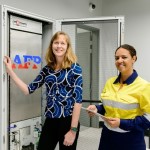
The Centre for Hydrogen and Renewable Energy (CHRE) provides world-class research, training and support to the hydrogen and renewable energy industries.
The Centre's undertakes R&D in three programs:
- Bioeconomy, energy efficiency and waste valorisation, including waste-to-energy and materials, biomass, SAF and biofuels, biochar, industrial heat utilisation, and carbon capture, utilisation and storage.
- Renewable electrification, including wind, solar, transmission and distribution, microgrids, batteries, pumped hydro and other related technologies.
- Hydrogen, through electrolysis and derivatives such as ammonia, methanol, a range of e-fuels and e-chemicals, and storage and distribution in gas and liquid form.
The Centre also works closely with other CQUniversity Centres and Institutes on enabling research programs such as those in workforce development, water and environment, social license, and industry applications.
- Website
- https://cqu.edu.au/chre
- Organisation type
-
- University Research Centre
- Cooperative Research Centre – Partner Organisation
- Number of research staff
- 20-100 research staff
- Address
- CQUniversity School of Manufacturing Gladstone Marina Campus 113 Bryan Jordan Drive Callemondah QLD 4680
Strengths and capabilities
- Design, synthesis, and integration of nanostructured catalysts for energy conversion/storage devices and environmental applications.
- Electrochemical testing and performance validation of energy devices, including fuel cells, solar cells, and batteries.
- Expertise in advanced instrumentation for materials characterisation and product analysis.
- Solid oxide cells and stacks for fuel cells and electrolysers: materials characterisation, materials and component manufacture, cell and stack testing, supply chain development.
- Electroceramics: manufacture, testing and characterisation of multilayered functional electroceramics.
- Renewable hydrogen energy systems: performance modelling, design and construction from lab scale to pilot plant scale testbeds.
- Electrochemistry: electrode compositions, nano/microstructures, surface reactivities, electrode-electrolyte interfaces and electrochemical characterisation, testing and reaction chemistry kinetics.
- Materials Science: surface and microanalysis of fuel cell and electrolyser materials.
- Testing and analysis of electrical machines and drives, digital control, estimation and identification, non-linear control, instrumentation, automation, renewable energy, micro grids, and hybrid electric systems
- Energy systems modeling and optimization –
- Integration of storage and renewable energy resources
- Smart Grids design, operation and economics,
- Restructured power systems and power markets
- Power systems operation and planning - reliability (adequacy and security) and resilience assessment of power systems
- Demand response - application of artificial intelligence and optimization methods in power system studies
Facilities and major equipment
- Parr stirred movable head pressure reactor for conducting chemical reactions under controlled pressure, temperature, and agitation (hydrogenation reactions, nanomaterials synthesis, pressure-dependent kinetics studies)
- Liquid Chromotography Mass Spectrometry (LCMS) Triple Quad for identifying new compounds and quantifying compounds at trace levels.
- Gas Chromotography Mass Spectrometry (GCMS) for identifying volatiles in food, beverages, soils and water matrices
- Inductively Coupled Plasma Mass Spectometry (ICPMS) for identifying minerals at trace levels
- Fourier Transform Infrared Spectometry (FTIR) for non-invasive and rapid chemical characterisations of macronutrients and bioactive compounds, particularly in food
- High Sensitive Potentiostat for customised non-invasive field sampling as well as screening physiological samples for disease biomarkers and neurotransmitters.
- Simulation software (DigSILENT Power Factory, MATLAB/SIMULINK, Ansys, Abacus)
- Biodiesel production, engine testing and engine emission facility
Key science sectors
More information about the sectors this centre is involved in:
Update details
Is this your centre? See any issues? Send a request to update your listing.