ARC Centre of Excellence GETCO2
Centre of Excellence for Green Electrochemical Transformation of Carbon Dioxide, The University of Queensland
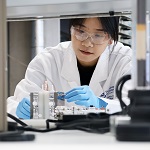
The ARC Centre of Excellence for Green Electrochemical Transformation of Carbon Dioxide (GETCO2), led by The University of Queensland, brings together Australian and international universities, industry and government partners to shift CO2 from a climate challenge into a resource.
The Centre advances next-generation CO2 electrolysers through research in electrodes, catalysts, membranes, characterisation and computation.
Its flagship programs target converting CO2 to commercially relevant products, including chemicals, synthetic liquid fuels and value-added co-products.
Through research, training, engagement and translation, GETCO2 aims to build Australia's capability in green manufacturing, support a decarbonised economy and contribute to national and international net-zero goals.
- Website
- https://www.getco2.org/
- Organisation type
-
- Australian Research Council Centre of Excellence – Headquarters
- Number of research staff
- Up to 20 research staff
- Address
- Andrew N. Liveris Building (#46), The University of Queensland, Saint Lucia Campus
Strengths and capabilities
- Carbon capture and utilisation
- Electrochemical CO2 conversion
- Membrane fabrication and testing
- Catalyst performance testing
- Electrochemical device prototyping
- Synthetic fuel development
- Industrial decarbonisation
- Net zero transition
Facilities and major equipment
- Membrane fabrication, characterisation and performance-testing facilities
- Catalyst and electrode synthesis fabrication equipment capable of fabricating up to 100cm2 electrodes
- Electrolyser component fabrication tools including SLA 3D Printer for rapid prototyping, a three-axis Computer Numerical Control (CNC) Router for custom fabrication, and several industrial hand tools
- Electrolyser test rigs with research grade electrochemical workstations, process control and data logging, and product analysis capabilities to test CO2, hydrogen, and other electrolyzers at power ranges from 10W to 2kW
- High-resolution infrared thermal imaging cameras and optical cameras to study device performance
- High-performance computing infrastructure for advanced computational modelling and simulation
- State-of-the-art cellulose and polymer pilot facilities supporting end-to-end development, from biomass refinement to advanced polymer manufacturing and scale-up
Lead researchers
- Professor Xiwang Zhang GETCO2 Director, ATSE Fellow, Clarivate Highly Cited Researcher and co-developer of Australia’s first portable CO2-to-formic-acid generator UQ-tech-turns-captured-co2-into-valuable-chemicals
- Professor Tom Rufford GETCO2 Deputy Director, Integrated electrolyser and electrodes expert co-developed UQ’s advanced electrolyser performance testing platform
- Professor Debra J. Bernhardt Computational chemistry expert, ARC Laureate Fellow
- Professor Ruth Knibbe Advanced imaging expert, ARC Future Fellow and Regional Representative for International Society of Electrochemistry
- Professor Simon Smart Technoeconomic and life cycle analysis expert, Deputy Director UQ Dow Centre, Net Zero Australia UQ Director
Achievements of the centre
- Developed Australia’s first portable generator making formic acid from CO2, water and electricity UQ-tech-turns-captured-co2-into-valuable-chemicals Turning captured CO₂ into valuable chemicals
- Established an innovative facility at UQ for testing electrolyser materials under standardised conditions, enabling new collaborations and partnerships GETCO2 Nanogenerator turns CO2 into Sustainable Power carbon-negative nanogenerator that absorbs CO2 and generates electricity, published in nature.com
- Nature Communications Established GETCO2-hackathon-challenge GETCO2 Hackathon featuring early to mid-career researcher teams plus industry mentors pitching a high-impact innovation towards industrial electrolysers. Published collaboratively in Chemical Science: Material needs for power-to-X systems for CO2 utilization require a life cycle approach
Key science sectors
More information about the sectors this centre is involved in:
Update details
Is this your centre? See any issues? Send a request to update your listing.