Terrestrial Ecosystem Research Network (TERN)
NCRIS
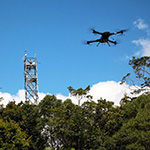
TERN is Australia's ecosystem observatory and monitoring network, transforming thousands of environmental measurements into nationally coordinated knowledge about the state, trends and resilience of Australia's land and coastal ecosystems.
Through a continent-scale network of monitoring infrastructure, data systems, field observations, remote sensing assets, modelling capability and partnerships, TERN delivers the environmental intelligence needed to understand, predict and respond to environmental change, support industry productivity and strengthen national resilience.
TERN operates Australia's ecosystem monitoring network through integrated terrestrial, coastal, agricultural, mountain, critical zone and remote sensing observatories. Using standardised methods and long-term measurements, TERN delivers trusted evidence of environmental change across continental, regional and local scales. By integrating information across scales, TERN improves Australia's capacity to predict environmental futures.
- Website
- https://www.tern.org.au
- Organisation type
-
- National Collaborative Research Infrastructure Scheme facility
- Number of research staff
- Up to 20 research staff
- Address
- TERN, The University of Queensland, Long Pocket Precinct, Level 5 Foxtail Building #1019, 80 Meiers Road, Indooroopilly QLD 4068 Australia
Strengths and capabilities
- TERN Data Discovery Portal
- Continental-scale gridded remote sensing, soil and landscape products
- Plot-based soil and vegetation surveillance monitoring data
- Calibration and validation data for remote sensing
- Carbon, water and flux sensors for climate monitoring
- Data ingestion, analytics and visualisation tools
- EcoImages Library
- EcoAcoustics Library
- Catalogued plant and soil sample library
- Nationally consistent field methods
- Annual Environment Condition Score
- Threatened Species Index
- State and Transition Models
- Soil and Landscape Grid of Australia
- Dynamic soil moisture maps
Facilities and major equipment
- Eddy covariance flux towers for carbon dioxide, water vapour and energy exchange in ecosystems
- CosmOz soil moisture meters for landscape-scle water monitoring
- Phenocams for vegetation seasonal change
- UAV drones for aerial mapping of ecosystem composition and change
- 1-hectare soil and vegetation plots for long-term ecosytem monitoring
- Acoustic sensors for biodiversity change
- Terrestrial laser scanners for vegetation structure and biomass
- Leaf area index (LAI) sensors for vegetation canopy density, growth and productivity
- Surface Elevation Tables for coastal inundation of wetlands
- Camera traps for vertebrate behaviour
- Soil moisture probes for ecosystem water use
- Greenhouse gas chambers for emissions from soils
- Radiometers of solar radiation and ecosystem energy balance
- Weather stations for atmosperic conditions
- Solar-induced Fluoresence (SIF) for plant photosynthetic activity
Lead researchers
- Professor Catherine Lovelock: global authority on blue carbon and coastal ecosystem restoration
- Professor Hugh Possingham FRS: developed the Threatened Species Index
- Professor Stuart Phinn: founded nationally significant Earth Observation initiatives
- Dr Will Woodgate: leader in scaling satellite measurements of ecosystem productivity using flux tower and SIF observations
- Dr Siddeswara Guru: developed TERN's CoESRA virtual desktop platform
Achievements of the centre
- Established Critical Zone Observatories at Fletcherview Tropical Rangeland SuperSite near Townsville in the Burdekin catchment and at Petrie, in the lower Pine River catchment.
- Publishes annually the Australia's Environment Report, searchable by postcode, showing trends by year in a range of environmental parameters
- Publishes annually the Threatened Species Index for birds, mammals, plants, frogs and reptiles
- Established OzSet, the coastal wetland monoring network for detecting changes in sea level inundation
- Establised the Agroecosystem Long Term Research (ALTAR) network, discovering which farming practices lead to excellence in productivity and ecosystem sustainability outcomes.
Key science sectors
More information about the sectors this centre is involved in:
Update details
Is this your centre? See any issues? Send a request to update your listing.